
Arrest Warrants in Reeves County
In Texas, an arrest warrant is a written order from a magistrate. It tells a peace officer, or a person the court names, to take the accused into custody. Reeves County splits the issuing work by case level. A felony charge runs through the 143rd Judicial District Court. Smaller matters go to a justice of the peace or a municipal judge, each issuing process within that court's authority. Before signing, the magistrate reviews a sworn complaint or affidavit laying out the facts. The signed order must identify the person, or give a reasonable description, name the offense, and show the issuing magistrate. That path differs from a bench warrant, which follows a missed setting rather than a new accusation of probable cause. The distinction matters when you call the clerk.
Reeves County Arrest Warrant Paper Trail
For a district felony, call the Reeves County District Clerk about the 143rd District Court file. The County Court at Law covers its own assigned criminal jurisdiction. Lower-level cases route to one of four JP courts or to Pecos Municipal Court. The court clerk can confirm a case number and the next step if the record is open. The District Clerk page lists felony case records and cautions that docket schedules can affect service. So call before you drive over. Reeves County publishes no warrant-number format and no bond schedule, so those details come only from the court itself.
What a Reeves County Arrest Warrant Contains
The warrant and its court file may carry the fields listed below. Reeves County posts no local warrant-number pattern and no public status-code table. Treat any sample label as a placeholder, not a real number.
| Warrant Number | Local format not published. No format verified |
|---|---|
| Named Subject | The person named in the court process; identity details may be restricted. |
| Charge / Offense | Offense listed in the order or supporting case file. |
| Issuing Judge / Court | Identifies the magistrate and the Reeves County court with authority. |
| Bond / Bail Set | No Reeves County schedule was located; ask the court or jail. |
| Date Issued | Date the signed process was ordered. |
Article 15.02 Sets Reeves Warrant Fields
Article 15.02 of the Texas Code of Criminal Procedure sets the required fields. An arrest warrant must state the accused, or a reasonably definite description, the offense, and the magistrate's signature and office. Article 15.04 covers the sworn complaint. Article 15.05 lists the facts that complaint must contain. These rules explain the core fields in a court record. They do not hand you a Reeves County warrant number, a bond amount, or a status code; the District Clerk or the issuing JP holds the actual case record. The official Chapter 15 text sets out the warrant requirements and the rules for execution.
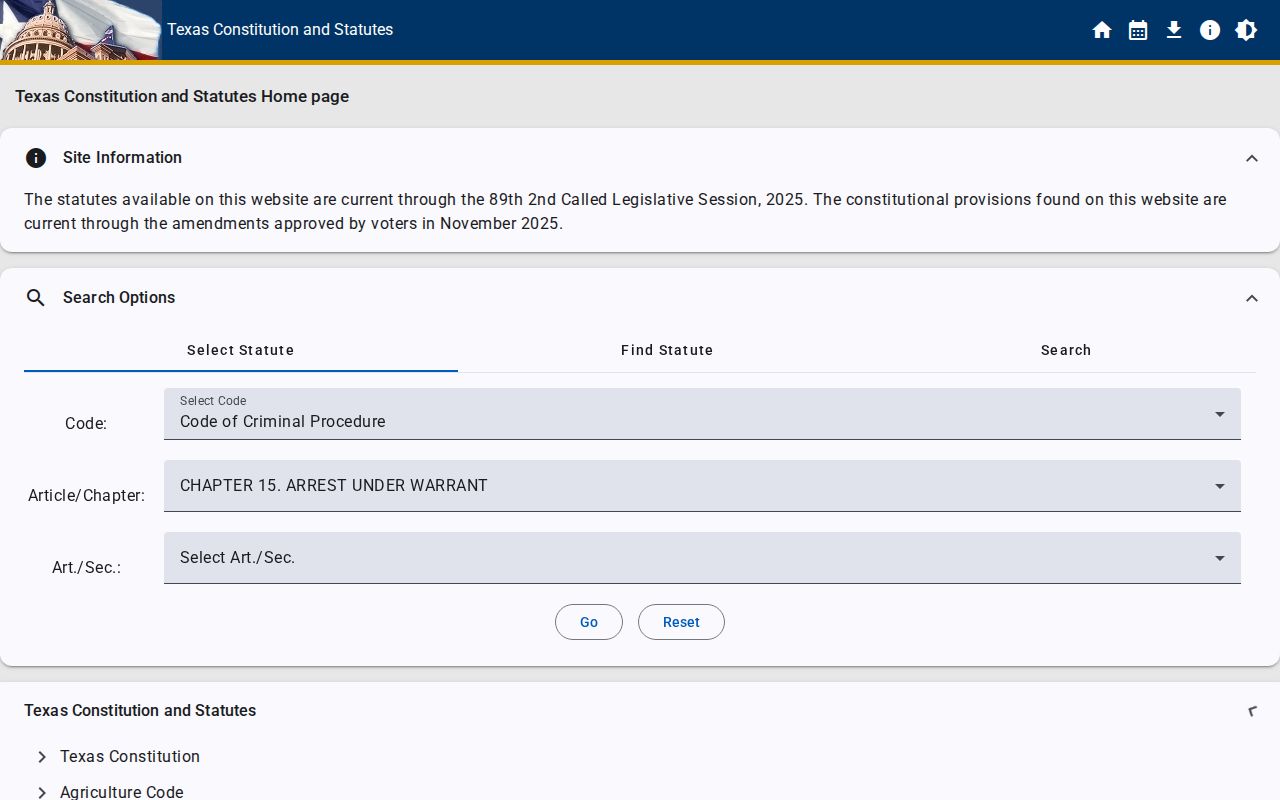
This is the state rule that governs the Reeves County arrest-warrant document. It is not an example of a local case.
How Reeves County Arrest Warrants Are Served
A warrant may direct the Reeves County Sheriff's Office, a county constable, Pecos Police, or another authorized peace officer to act. The sheriff runs the jail and provides court security. Constables also serve process. Which officer gets the order depends on the court's direction and assignment. After an arrest, Texas law requires prompt presentation before a magistrate. Reeves County publishes no county-specific magistration schedule, bond window, booking-to-release timeline, or voluntary-surrender procedure. Ask the court or a lawyer before you go to a facility.
Reeves County Officers Serve Arrest Warrants
The serving officer and the issuing court answer different questions. A deputy or constable may execute the order, but the clerk holds the case and the judge sets what comes next. Pecos Police may handle a city process. A warrant served by police does not turn the case into a municipal citation. The Reeves County Constables page describes service authority, the Pecos Police page gives city contact details, and the official Sheriff's Office page answers jail and county service questions.
Arrest Warrant vs Summons vs Bench Warrant
The three documents do different jobs. In Reeves County, an arrest warrant directs custody, a summons orders the person to appear, and a bench warrant usually follows a missed court obligation. The clerk can confirm which process issued and whether a date or bond applies.
| Feature | Arrest Warrant | Summons | Bench Warrant |
|---|---|---|---|
| What It Orders | Officer to take the named person into custody | Person to appear on a stated date | Return to court after missed obligation |
| Basis | Probable cause or authorized process | Court direction to appear | Failure to appear or comply |
| Who Issues It | Judge or magistrate | Court or authorized officer | Judge handling the existing case |
| How to Respond | Confirm with counsel and issuing court | Attend as directed | Ask the court about appearance or recall |
A bench warrant is not itself a new probable-cause charge. The Reeves County bench-warrant process follows the missed obligation.
Federal Warrant Route in Reeves County
A federal case in Pecos belongs to the Western District of Texas, not to a Reeves County clerk. Federal arrest process may fall to the U.S. Marshals Service or partner officers. PACER can show public docket entries. It is not a warrant-status lookup, and sealed filings may not appear there. So do not treat a county search as a federal check. If a federal case may be involved, call a lawyer or the federal clerk. The Western District's jurisdiction page lists Reeves County within the Pecos Division.
What to Do If There Is a Warrant for You
If a Reeves County arrest warrant may carry your name, confirm the issuing court and the cause number before you appear anywhere. A lawyer can ask about bond, a voluntary appearance, a motion to recall or quash, or a court setting. Bond addresses release and return. It does not resolve the underlying charge, which stays with the court. No Reeves County office promises a walk-through, a set bond amount, or release after surrender. Ask whether the warrant is sealed and whether the court can provide a record. If the matter concerns a relative, skip the extra personal details when asking for routing help. Keep the call to what the office needs to point you to the right clerk.
Important: Speak with a Texas lawyer and confirm the issuing court's process before surrender; no Reeves County source promises a walk-in release.
Reeves County Arrest Warrant Requires Counsel
A Reeves County warrant tied to a serious charge or a sealed indictment is not something to face alone. A lawyer can reach the issuing court before any appearance. Reeves County posts no attorney-bond form, no bond schedule, no surrender window, and no local motion-to-recall fee. Borrowing another county's rules would mislead you, so ask the clerk directly what applies here. After an arrest, Article 15.26 opens the warrant and its supporting affidavit through the magistrate's clerk, unless another confidentiality rule blocks release. Juvenile arrest warrants carry extra protection under Family Code §58.010. The clerk can tell you whether any public portion exists. For confirming the right court and keeping written proof after a recall or bond, the Reeves County resolution steps walk through it plainly.